


Journey of the Rodeo Bull: From the Ranch to the Chute
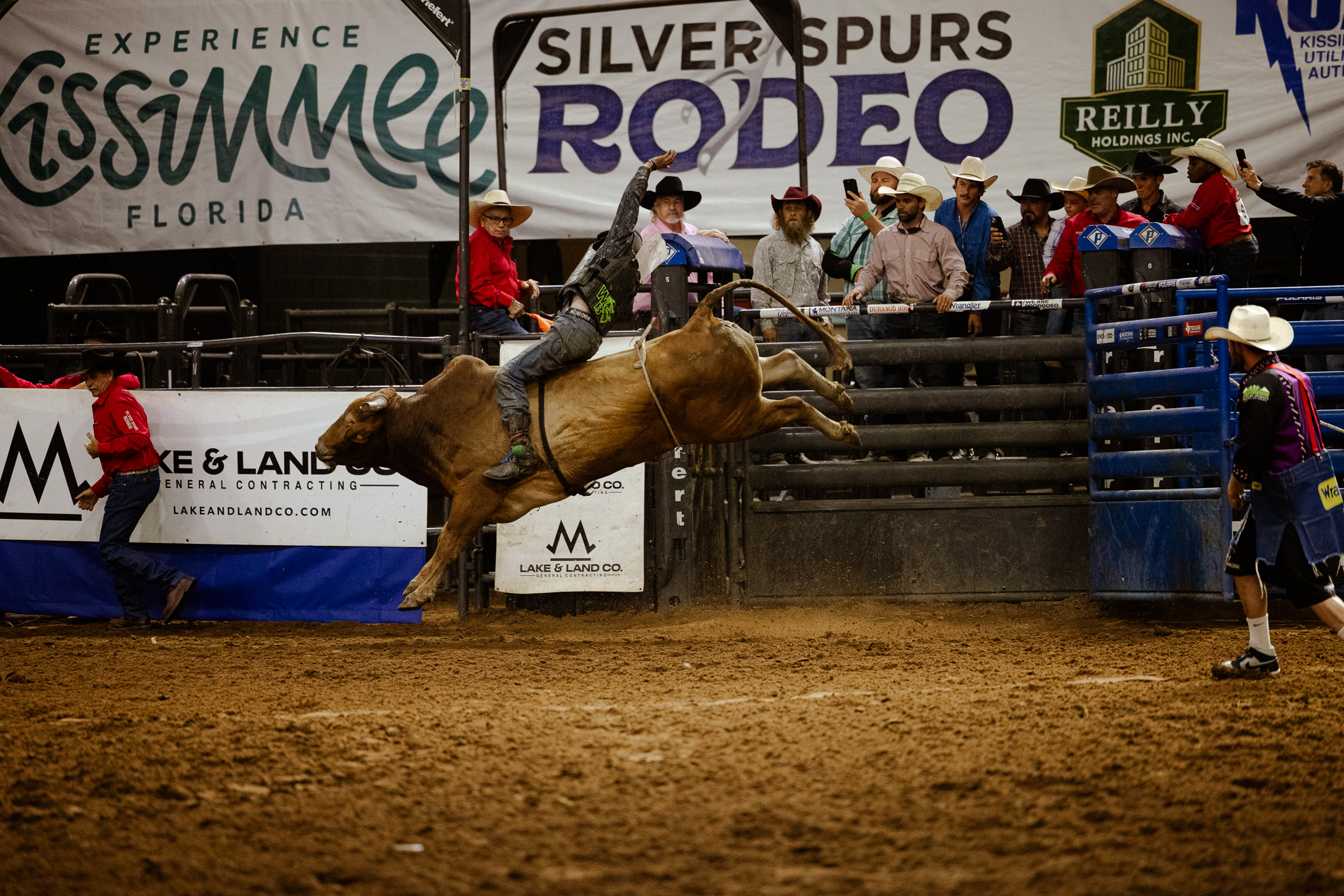
Contestants have eight seconds to make it count.
But just how does a rider’s rodeo bull get all the way to the event itself? The journey starts long before entering the chute. From the ranches of several Silver Spurs Club members to the Silver Spurs Arena, our bulls have a trek of their own. Learn how rodeo bulls are bred, selected, and trained, as well as what life is like for these two-thousand-pound bucking athletes on the ranches of Central Florida.
Where Do Rodeo Bulls Come From?
The bulls you see in the arena come from long lines of hardy bucking bulls. These animals are raised on working ranches by experienced stock contractors who understand what it takes to be a bucking bull of undeterred spirit. These bulls are born into carefully managed breeding programs, where strength, balance, and natural bucking instinct are passed down through generations.
At the Silver Spurs Rodeo, that tradition runs deep. In the 1960s, in an effort to provide their own stock for the rodeo, members Doug Partin and Shang Bronson began breeding and raising bulls for the Silver Spurs Rodeo. To increase the quantity of stock, many ranching families and members of the Silver Spurs Club followed in their footsteps.
Today, many of the bulls you’ll see are still tied to those local roots, bred and raised in Osceola County.
How Are Bucking Bulls Bred and Selected?
You could say that every bull that makes it to the rodeo was born to buck. This is because genetics plays a fairly big role in whether or not a bull is predisposed to buck, passing down the instinct through carefully chosen lineages.
Why do bulls buck in the first place, though? While their natural impulse to buck varies from bull to bull and is then encouraged through consistent training, from an evolutionary standpoint, the instinct to buck is a bull’s effort to rid itself of predators or unwanted weight.
After a calf is born, stock contractors look for several specific traits to indicate whether or not it has the potential to become rodeo elite.
What Makes A Great Bucking Bull:
- Natural instinct to buck
- Strength and athleticism
- Consistent performance
- Unique movement (spin, kick, direction changes)
Not every bull makes the cut. At about a year of age, testing begins to see whether or not they have the heart and talent to become champion livestock.
Rodeo Bull Training: How Do They Get Bulls To Buck?
One of the biggest myths is that bulls can be trained to buck a certain way, or to even buck at all. It’s all about instinct, and each bull has their own unique bucking habits.
There are a few things that can be done to encourage bucking, however.
First, contractors must wait until the calf is about a year in age to test their bucking capabilities. At this age, the calves are known as yearlings, and are tested with a weighted dummy on their backs and a flank strap loosely tied around their waists, encouraging their natural instinct to buck. This is done about two or three times early on, to see if they have the intuition to buck.
After showing potential, those who make the cut are given time to mature, and around the two year mark they continue their training to become a rodeo bull. These young bulls are bucked in greater frequency, familiarizing them with the arena environment and atmosphere.
After the bull has established its trip, a term that describes each bull’s bucking pattern, they’re ready to compete in the rodeo as a star bucking bull. By the time they reach competition, what you’re seeing isn’t trained behavior; it’s instinct at full force.
Day of the Rodeo: What’s It Like For Bulls In The Arena
The mood in the stands is electric. Chatter and cheers are lively and each event draws a round of applause more thunderous than the last. The crowds in the stands eagerly await the signature event of the evening: the bull rides. After their long journeys from the ranches of Osceola County to behind the scenes of the Silver Spurs chutes, this is what it’s all been leading to.
Entering the Chutes
When it’s time for a performance, Silver Spurs bulls are hauled from the greens of the Silver Spurs Ranch in Kenansville, escorting them to the arena. Here they are placed in the back pens, the metal pens set up in the back of the rodeo arena until it’s time for them to make their way to the bucking chutes. After traveling through several holding pens, they’re finally loaded into the bucking chute.
Before releasing them into the arena, the bull is fitted with a flank strap around the waist, and a bull rope around the shoulders. Handlers nearby focus on keeping the bull calm until the rider is ready. Then the gate is open and the bull busts out.
In The Arena
As the bull bursts into the arena, the rider must stay on for at least eight seconds (if not longer) for a qualifying score. Each bull is going to buck differently, some darting to the left or right, others spinning continuously in a circle, so that no ride is the same. As the rodeo’s most iconic event, each ride gets an immediate reaction from the crowd, and though for the riders this eight seconds may be the longest of their life, everything hanging on each passing moment, for the audience the momentum passes before they even know it. With champions from across the world, the event is one of the greatest thrills of the Silver Spurs Rodeo. It’s fast, unpredictable, and over in seconds, which is exactly what makes it so intense to watch live.
What Happens To Rodeo Bulls After They Compete?
After the rides are through with and the crowds dissipate, it’s time to go home. The bulls are stripped of the flank strap and bull rope and are sent down the pens to the holding area, from which they are loaded onto the trailer. From the arena, they travel back to Kenansville, where the bulls will rest until it’s time for the next Silver Spurs Rodeo.
Rest to Retirement: A Bull’s Paradise
Life on the ranch is an idyllic one for a bull. Miles of green pastures, frequent feedings, and fellow broncs and bulls fill their days of leisure. Most of their time is spent grazing, resting and moving freely far from the noise and pressure of competition. So long as they remain a bucking bull, they’ll keep competing, performing a mere eight seconds roughly ten times a year, and spending the rest of their days grazing away on the ranches of Osceola. Retirement, meanwhile, can come at any age, entirely depending on the bull’s own inclinations. Once retired, bulls live the good life on the ranch full-time.
How Long Do Bulls Live?
Rodeo bulls enjoy a long, comfortable life. Performing only a few times a year, they spend the rest of their days living on the ranch for the rest of their natural lives. Typically, a bull lives about 15-20 years, usually competing for about 3-5 of those years (though elite bulls may perform for up to 10 years). After they finish out their competition years, they typically enter breeding programs and spend their time among the fields and their fellow bulls.
Catch The Action At The Silver Spurs Rodeo
Every rodeo bull has a story. It starts on the ranch, shaped by careful breeding, steady training, and a natural instinct to buck. By the time the chute opens, you’re not just watching a ride: you’re seeing years of preparation, power, and precision come together in eight seconds.
At the Silver Spurs Rodeo, that journey is part of a tradition built right here in Osceola County. Now that you know what goes into every ride, the next step is seeing it for yourself. Catch the action live and experience the power, rhythm, and legacy behind every bull.
